

Category search happens when a traveller knows the kind of trip they want and has not chosen where to take it. They look for an island holiday from Australia, or where to go in September with young children. The searcher has not decided yet. This is what separates it from the rest of your organic traffic.
Category search is one of the places that a destination can win a traveller that a competitor might otherwise have taken. Branded search mostly converts people who already chose you, and booking search sits largely with your operators and the online travel agents.
Reaching travellers while they are still choosing is also early enough to influence how long they stay and what they spend.
For one destination we recently audited, undecided travellers accounted for only 3 percent of total search traffic. So category search represented a true growth opportunity for their marketing.
Their issue was, that standard reports showed steady traffic growth, yet nearly all that increase came from travellers who were already searching for the brand. This meant that the client’s reporting was masking the opportunity. They were missing out on almost an entire category of search. We uncovered a huge opportunity to improve performance and to obtain customers from new markets.
In this blog, we show you how to assess your current position, spot missing pages, choose your topics, and start writing.
How does category search differ from brand search?
Brand searches come from travellers who already have your destination in mind. They search for your specific name, locations, weather, local activities, or transport options. Most destinations capture these visitors easily.
Category searches come from travellers describing an ideal trip without naming a place. Examples include searches for island holidays or family trips in September. These searchers have not selected a destination yet, which makes category search the primary way to win these visitors from competing locations through organic search.
In journey terms, category search sits in Dream and early Plan, the stages where a traveller discovers a destination and starts building a shortlist.
How do you find out where you stand?
Start with search data. Export 12 months of search terms from Search Console or your chosen SEO/GEO tool. Label each query as brand, category, or commercial intent to establish your baseline distribution.
Segment your category queries by the country of origin. A searcher in Auckland comparing regional options evaluates different competitors than a searcher in Los Angeles choosing between international destinations. Segmenting by country prevents global totals from masking markets where your site does not rank.
Identify which competitor domains rank for your top category terms when searched from each target market using keyword research tools. For example, the competitor pages that rank for "island holiday" terms for searches from the United States demonstrate what content earns the top position for that search. Evaluating high-ranking pages reveals your actual search competitors rather than traditional brand rivals.
Review traffic estimates for top-ranking competitor pages from your target markets. These traffic figures provide verified evidence as to which search terms are worth investing in.
Which pages are you missing?
For destinations category demand often lines up on six things:
- the reason for the trip,
- the place,
- the time of year,
- who is travelling,
- what they are comparing you against,
- and the market they are in.
Crossing those gives you a list of possible markets in the category search arena.
Take the reason and the traveller and you get a family holiday market. Add the time of year and you get a where to go in September with young children market.
Use your search data to guide you as to which of these combinations or category search markets has the potential to drive the biggest results if you invest into content to capture them.
Once you have identified the category search markets likely to drive the largest results, then it’s time to think about creating a set of content pages within a funnel that works towards the capture and then conversion of these markets. The result is to capture category search in the Dream phase and then drive it towards the Plan phase, with your destination at the forefront. Use these five page formats.
- Write a comparison page for each competing destination: state flight times, weekly costs, relative strengths, and ideal traveller profiles. These pages rank well because prospective visitors actively search for direct comparisons before deciding.
- Create a seasonal guide page to answer timing questions. Detail weather, pricing, crowd levels, and scheduled events month by month so searchers can choose the best window for their trip.
- Build an activity guide that converts interest into an itinerary. Detail 10 to 15 specific experiences by listing the operator, cost, duration, and target audience. Concrete details convince travellers that a trip is practical and easy to execute.
- The audience guide pages speak to one traveller. Write a family guide, a honeymoon guide, a diving guide, each with itineraries at 5, 7 and 10 nights and a note on what needs booking months ahead. This is the page that makes a traveller feel the trip was designed for them.
- Create a cost guide. Give a price band for a week for two and for a family of four, say what is included, and show what three more nights add.
These pages cross the Dream stage of the funnel into Plan. Comparison and audience guides win the traveller who has not chosen you yet. Seasonal, activity and cost guides help to keep the audience that is moving into the Plan phase.
A traveller who reads your comparison page still has to work out when to come, what they would do there, whether it suits their family and what it costs. The five formats together let one market segment plan a whole trip without leaving you.
A complete set of pages for each market generally ranks better than the same five pages spread across five markets. The five link to each other and cover one subject properly, which is what search engines and AI engines read as depth.
What makes the pages perform?
Answer the question in the title within the first 100 words.
If the page is where to go in September with young children, name the months, the areas and the reason before any scene setting.
A page that makes travellers scroll loses them.
Then give unique local details. Gather the material from people who live there. Use your own people as the authors. This helps earn authoritativeness and trustworthiness with the search engines, and distinguishes your content from the masses.
Give the reader somewhere to go next. A page that ranks but gives the visitor nowhere to go next has won the search and lost the traveller. More reach will not fix that.
What do you build first?
Evaluate potential pages using three metrics: searcher intent, monthly search volume, and how strong the pages already ranking are.
Closeness to a decision beats volume. A page comparing you against your main rival might draw 300 searches a month, and those 300 people have a shortlist, a rough date and a budget.
A weather page might draw 5,000, and most of those have already booked.
What stops these pages from performing?
Two primary issues prevent well-written pages from ranking in search results. First, search engines treat a link from another site as a vote of confidence, so a page with few of them earns less in rankings than established publishers, however good it is. Second, technical errors can block search engines from crawling and indexing the page content entirely.
Links are easier than they sound when you have operators. Every operator you feature has a website, and most will link to a regional guide that names them. Two or three links a month adds up quickly.
Technical issues require an audit to find and resolve specific site errors. Common problems include broken pages, long redirect chains, heavy client-side scripts, and pages omitted from search engine indexes. Fixing these technical issues ensures published content loads reliably and earns search rankings.
Do you know how much of your search traffic is new demand?
Most destination organic search reporting cannot separate the travellers who already know you from the travellers deciding where to go. That leaves the demand that grows your destination unmeasured.
We split the demand, find the pages you are missing, and write them with your local people. Every page is tracked against the referrals it sends. You see which new travellers you are winning, month by month.
See how we do itRather talk it through first? Book a call. Want to keep up as the ground shifts? Get our newsletter.

Written by
Dave Hockly
Director
Dave founded Data Story with a belief that better data leads to better marketing. With over a decade in digital marketing across tourism, hospitality, and growth businesses, he specialises in turning complex analytics into clear business strategy. Dave leads client relationships and oversees the agency's strategic direction.
LinkedInRelated articles

Destination and Experience
Your destination does not have an awareness problem
23 September 2026
How to tell whether awareness is your problem, and what to fix before you fund another campaign.
Read article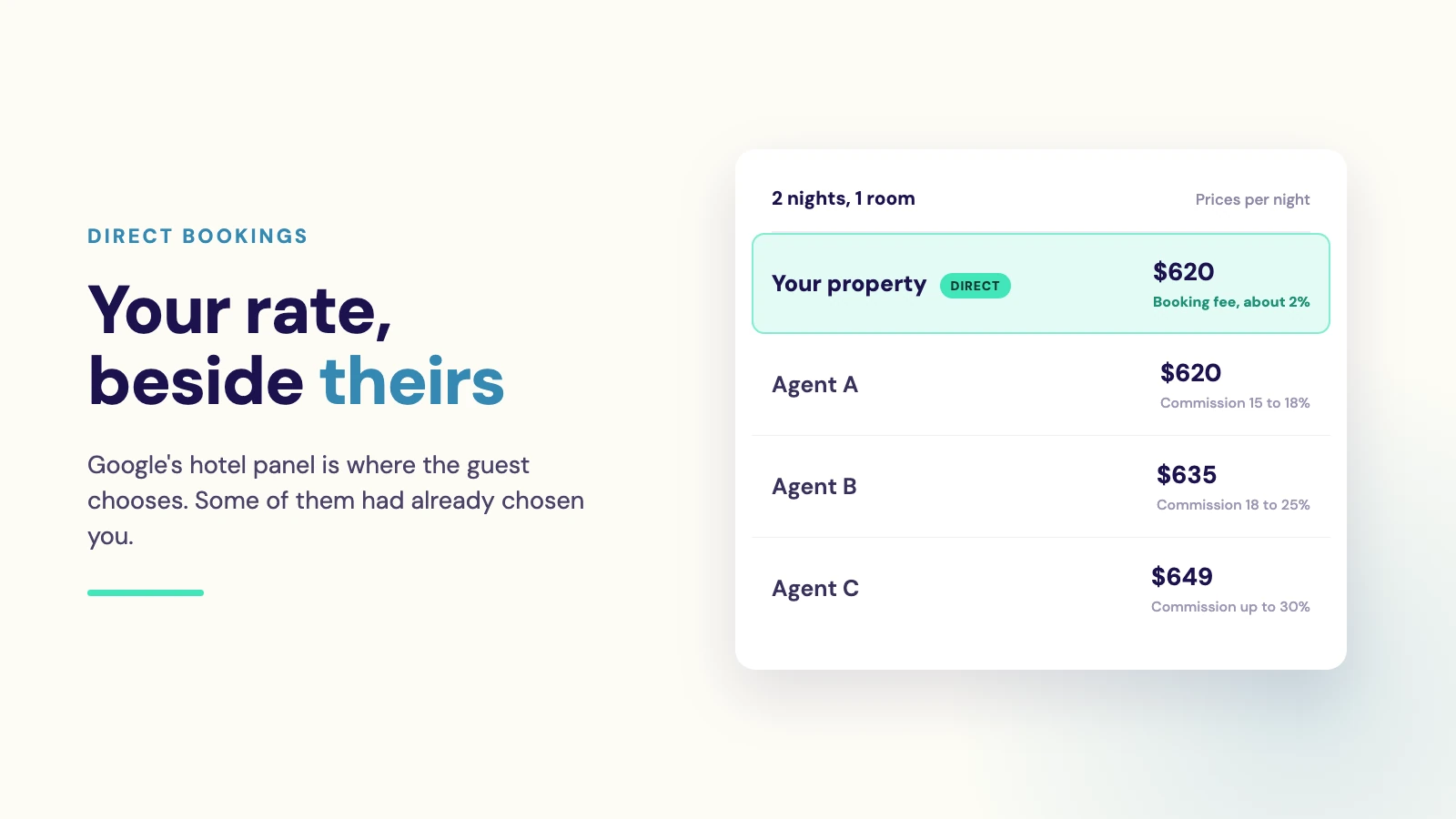
Paid Media
Why pay commission on guests you already won?
13 August 2026
Your brand, your reputation and your marketing earn the guest. Then the booking goes to an OTA, and the commission and the guest relationship go with it. How to use Google Hotel Ads to hold on to the booking, the relationship and the data.
Read article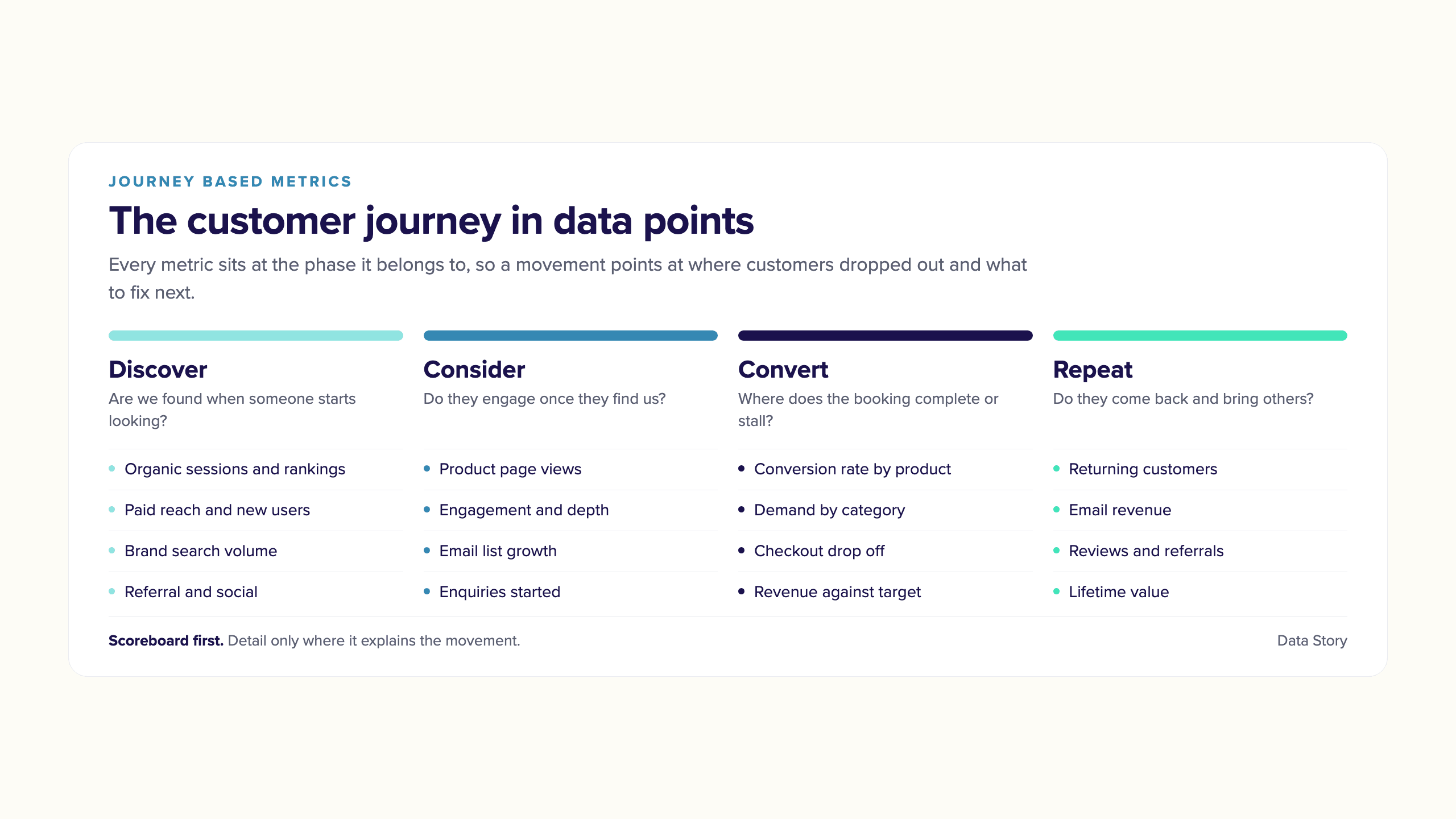
Analytics
Journey Based Metrics
11 August 2026
One client describes our reporting as her customer journey in data points, showing where growth sits and where customers drop out of the booking process. Here is what that gives a marketing team that board reporting cannot.
Read article