

"How do we get more people to know about us?" is the question most destinations bring to us first. This question stems from an underlying assumption that growth and improved metrics require more awareness. Destinations assume that if traffic or referrals are flat, increasing reach through brand campaigns is the logical response.
However, when prospective visitors who already know your brand arrive on your landing page and find no clear next step, additional reach continues to send them to a dead end. Visitors need an immediate action that moves them out of Dream and into Plan or Book: an operator referral link, a booking engine, or a downloadable itinerary. Media spend returns more when visitors find a clear path to that next step.
In the destination audits we run, awareness is usually already in place: years of brand campaigns have taught travellers your name. They search for you, land on your inspiration pages, read about a region, and leave without inquiring, signing up, or clicking through to an operator. The gap sitting between interest and action will not close with additional reach.
How do you tell whether awareness is the problem?
You can check whether awareness is your problem by reviewing data you already hold. Identifying where prospective visitors stop shows what to fix before you fund another campaign. In our experience, getting this diagnosis right decides whether your next campaign budget turns into leads.
The quickest test is to look at what people who already know you are doing.
High branded search volumes show that travellers already type your name directly into search engines. High traffic and long time-on-page on inspiration content indicate that current awareness efforts function as intended.
An awareness gap shows up as the opposite pattern: low branded search, minimal traffic to inspiration pages, and visitor volume that drops as soon as paid campaigns end. In that scenario, Dream content and spend build the initial audience you need.
Evaluating these existing engagement patterns confirms whether you need to build Dream reach or clear the path for current site visitors into Plan and Book. Establishing this baseline ensures you do not waste campaign funds on audience acquisition before fixing your site structure.
Where do those visitors go?
In our experience, destination sites often separate inspiration pages from the booking/referral layer. Region pages show imagery and storytelling but offer only a newsletter form or social link. Pages that generate operator inquiries sit three or more clicks deep, leaving ready-to-book visitors with no clear next step.
Conversion barriers closer to the booking decision also stop prospective visitors who have chosen a destination. Listing cards frequently lack prices or ratings, user reviews remain hidden, and signup forms ask for excessive fields without offering immediate value. Each point of friction reduces conversions at the moment of highest intent.
Why does more reach not fix it?
First, we must determine whether a website has an underlying conversion problem. If conversion paths are broken, additional reach sends more prospective visitors to unchanged pages, maintaining the same drop-off rate. Total traffic increases while the percentage of visitors moving to operator listings or bookings remains flat. Total leads stay constant while your cost per lead increases.
Disconnected analytics reporting often conceals these conversion bottlenecks. Paid media channels track clicks and basic website analytics record total sessions, but standard setups fail to flag prospective visitors who consume content without finding a next action. Setting up cross-domain event tracking reveals where high-intent traffic abandons the journey.
Judge each layer of media on the job it was bought for. A Dream campaign is read on reach, video completions and the retargeting audience it builds, while Book is read on referrals and bookings. Reading a Dream campaign on bookings makes good awareness spend look like waste.
Campaigns that generate traffic appear unsuccessful when the destination website fails to convert incoming prospective visitors. Boards often respond by reducing media budgets while leaving website conversion barriers intact. In these cases, the campaign fulfilled its role, but the website journey failed to capture the generated interest.
What does fixing it look like?
Resolving these user journey bottlenecks requires aligning site features directly with visitor intent. Transforming passive content pages into active conversion pathways ensures your existing traffic yields measurable referrals.
Every inspiration page requires a call to action aligned with where the visitor is in the journey.
- In Dream, prospective visitors early in their research need options to save itineraries or view estimated costs.
- In Plan, prospective visitors comparing options require direct links to operators, accommodations, and pricing.
- In Book, visitors ready to commit need the airline, a deal or an operator's booking page one click away.
Fixing these pathways relies mostly on existing digital assets. We connect inspiration content directly to relevant operators, offer downloadable planning resources in exchange for contact details, and display clear pricing and reviews on listing cards. These adjustments capture value from current traffic without requiring extra advertising spend.
Structuring these page updates systematically ensures full coverage across your content hierarchy. We start by mapping visitor journeys from top entry pages through to partner referrals, removing unnecessary form fields and adding clear interactive elements along the way. This systematic review optimises the value of every existing session.
Start optimisation on your highest-traffic pages to maximise impact. Most sessions land on a small number of pages, so adding clear calls to action to your top ten usually addresses a large share of the drop-offs. This yields performance data before you commit to broader site updates.
Paid media can then pick up the visitors who read and left. Retarget inspiration page readers with the Plan step they skipped, such as the itinerary or the operator list for that region. Those audiences usually cost less to reach than cold ones, because they have already shown interest.
Testing page changes demonstrates measurable value before full site redesigns. For West Coast Wilderness Railway, we tested a new version of their busiest journey page against the live page, and it lifted clicks through to the booking site by about 49 percent over the same 30 days. For Destination Queenstown, we conducted a user experience audit and targeted optimisations, increasing the primary conversion rate by 26 percent.
When does awareness spend make sense?
Awareness campaigns earn their return once conversion paths work. When inspiration pages guide readers to a logical next step, campaign traffic converts into trackable leads at a higher rate. Resolving conversion obstacles first ensures future media spend pays off.
Some markets do have genuine awareness gaps, and these growth markets justify heavier Dream investment. In these regions, prospective visitors searching for relevant experiences do not encounter your destination in search engine results or AI answers. Splitting budget between growth and harvest markets sends reach spend where demand generation is needed.
Where do you start?
We suggest starting with a baseline data review to evaluate how prospective visitors currently interact with your destination site. Reviewing analytics metrics across key pages confirms whether your focus should be conversion optimisation or reach expansion.
Once data confirms a conversion bottleneck, audit your top five to ten highest-traffic inspiration pages to inspect available user actions. Document existing calls to action, noting pages that end only in generic newsletter forms or social links. Prioritise updating these high-traffic pages first.
Are you funding reach to fix a conversion problem?
Many destination websites generate sufficient visitor interest but lack effective conversion pathways. Traffic arrives as intended, yet pathways connecting regional content to operator listings are not adequate. Connecting these pages offers an immediate win because these audiences are already on your site.
We identify where visitors drop off, add direct calls to action on key pages, and test performance before major investments occur. Every optimisation is evaluated against lead generation metrics in a clear reporting structure. This provides verified performance data for your next budget review.
See how we do itPrefer to discuss your setup first? Book a call. Want to stay informed as the industry evolves? Subscribe to our newsletter.

Written by
Dave Hockly
Director
Dave founded Data Story with a belief that better data leads to better marketing. With over a decade in digital marketing across tourism, hospitality, and growth businesses, he specialises in turning complex analytics into clear business strategy. Dave leads client relationships and oversees the agency's strategic direction.
LinkedInRelated articles
Paid Media
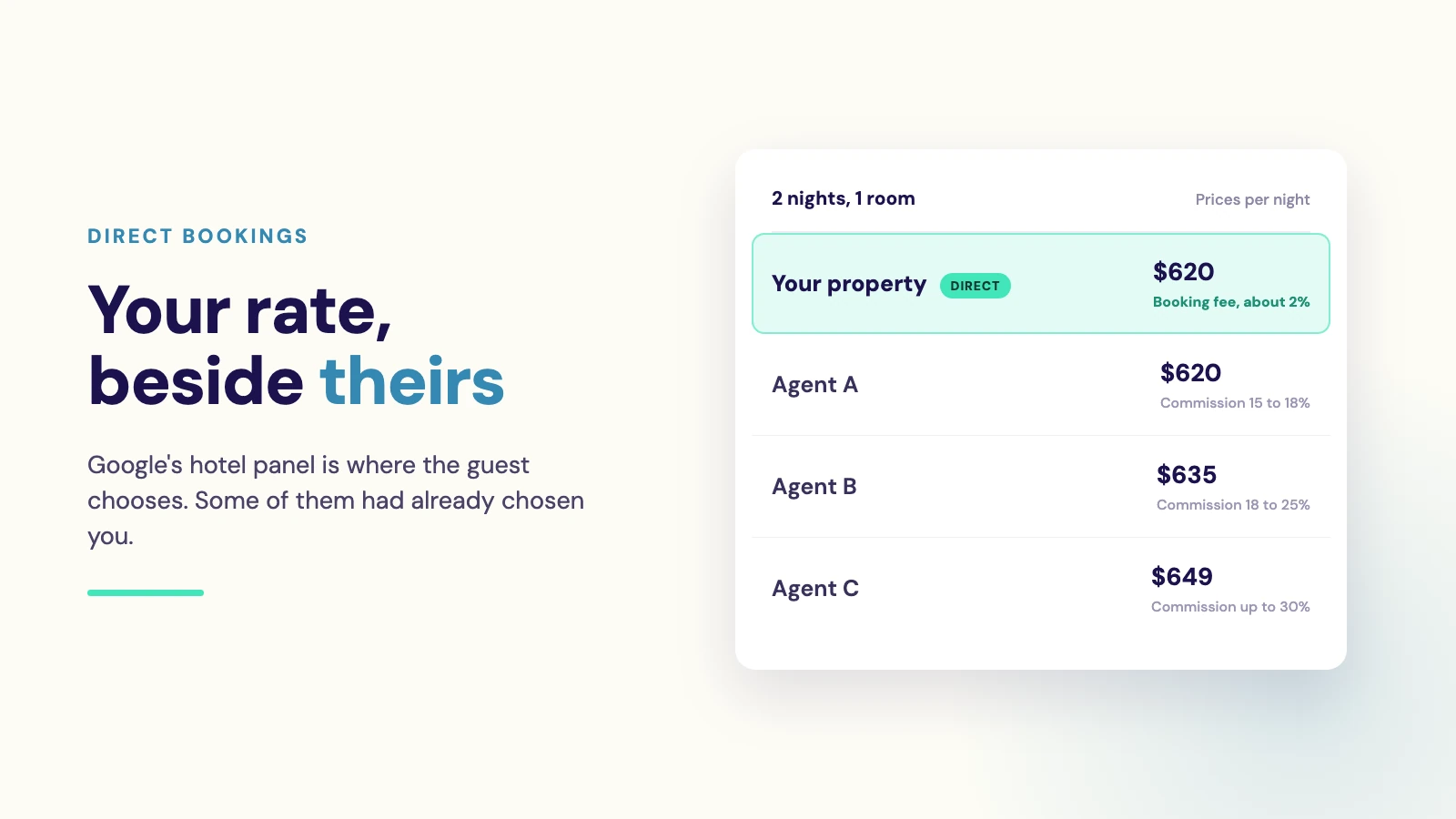
Why pay commission on guests you already won?
13 August 2026
Your brand, your reputation and your marketing earn the guest. Then the booking goes to an OTA, and the commission and the guest relationship go with it. How to use Google Hotel Ads to hold on to the booking, the relationship and the data.
Read article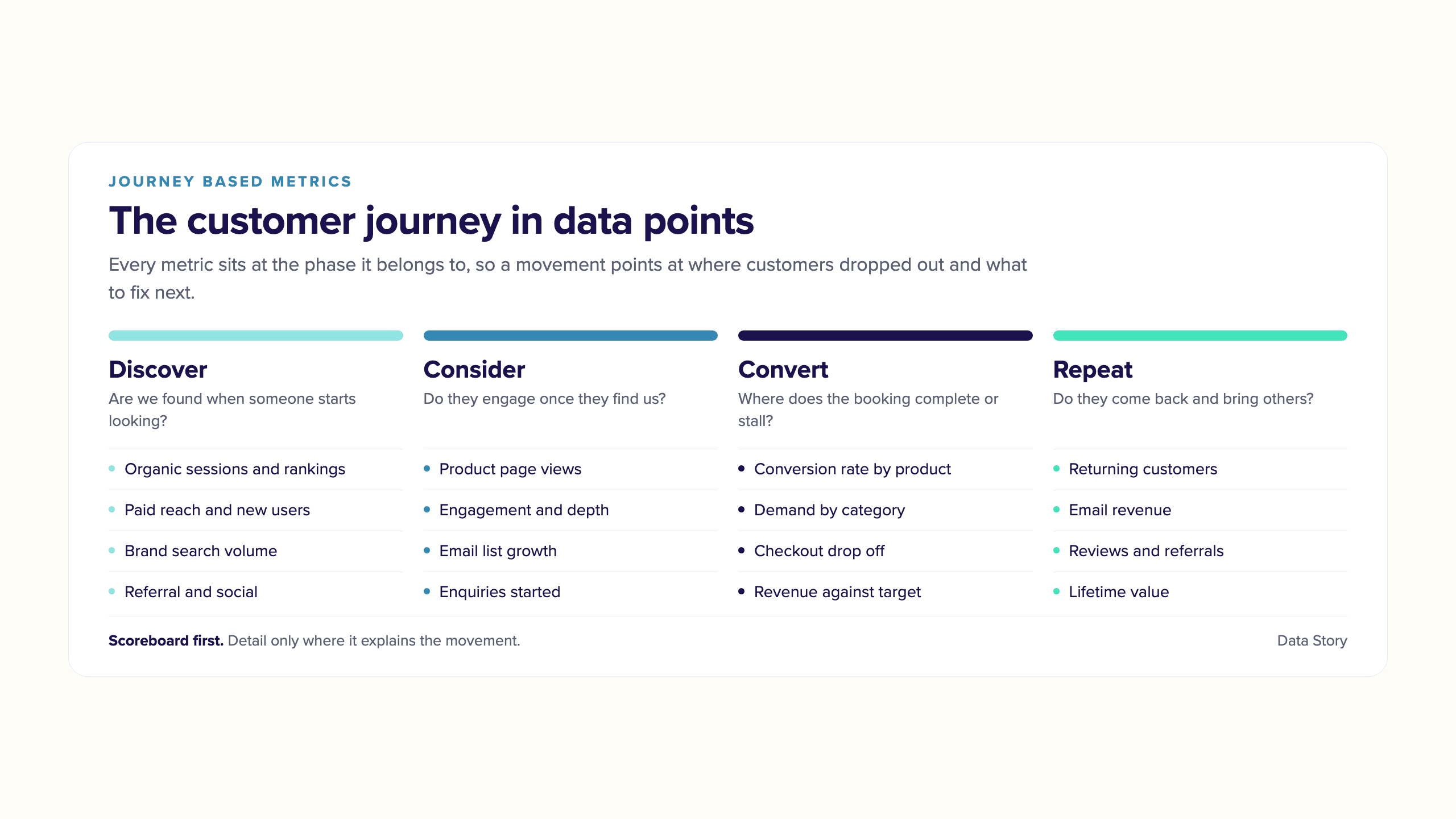
Analytics
Journey Based Metrics
11 August 2026
One client describes our reporting as her customer journey in data points, showing where growth sits and where customers drop out of the booking process. Here is what that gives a marketing team that board reporting cannot.
Read article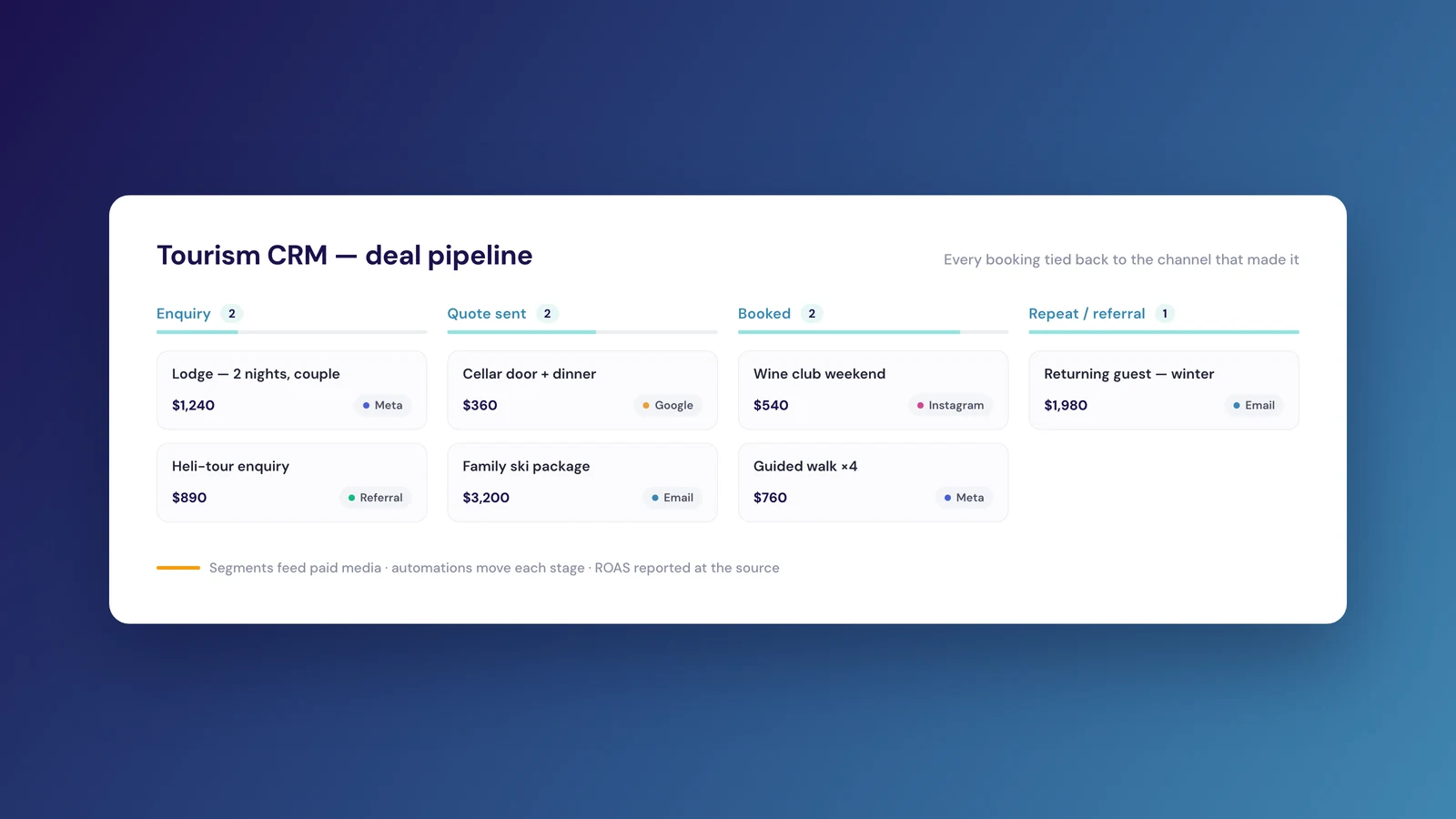
CRM
How we do CRM for destinations, experiences and tourism businesses
22 July 2026
For a tourism business, the difference between a CRM that holds contacts and one that drives revenue sits in a few specific places: attribution, audiences, automation and repeat bookings. How we refine each.
Read article